

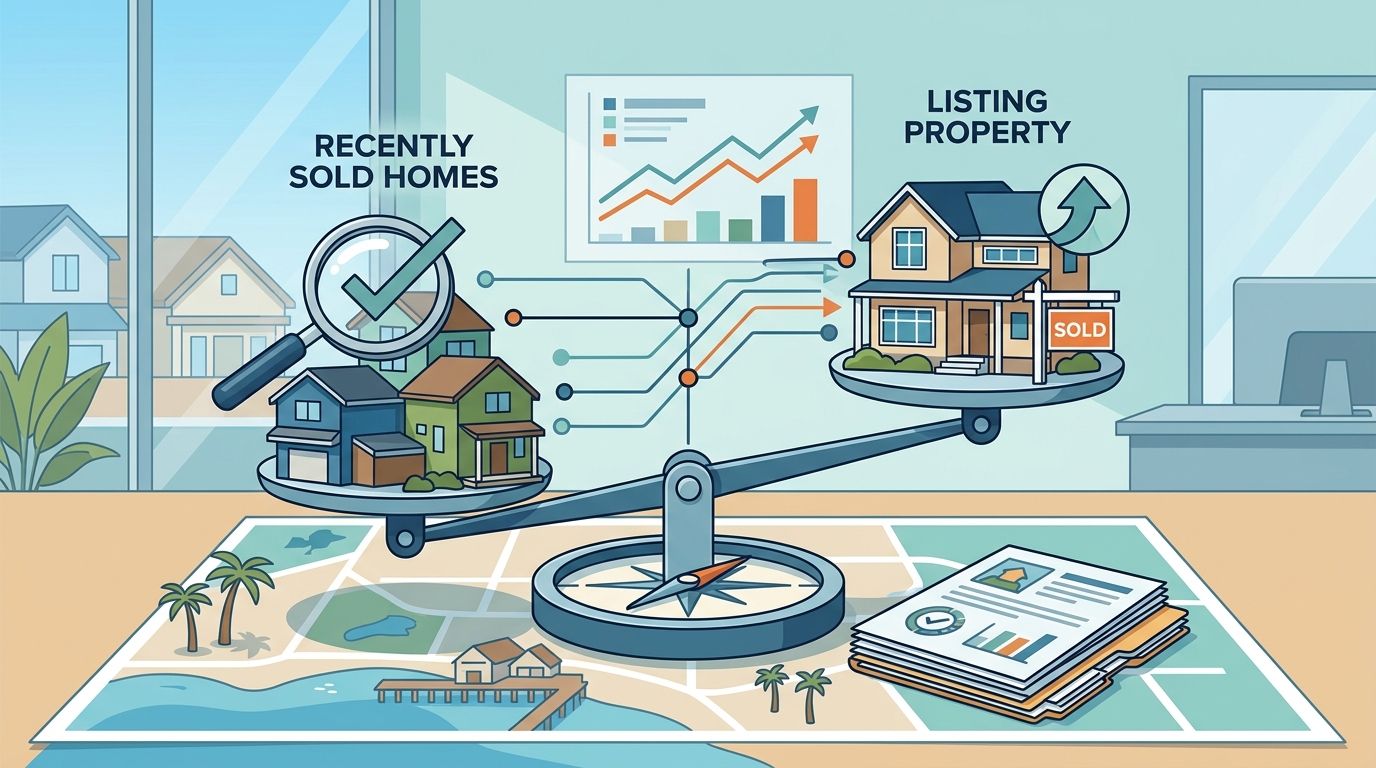
Comparable sales, or comps, are the primary data points used to determine a realistic listing price for your home. In Seal Beach, these recent transactions directly influence what buyers are willing to pay and how lenders appraise your property. Kimberly Kelly, a local real estate expert, uses these metrics to position your home competitively in the coastal Orange County market. Understanding this relationship helps you avoid overpricing or leaving money on the table.
Defining the Role of Comparable Sales
A comparable sale is a recently sold property that shares key characteristics with the home being valued. These characteristics typically include location, square footage, bedroom and bathroom counts, and overall condition. In a tight market like Seal Beach, the proximity of the comp to your property is critical. A sale on the same street or within the same neighborhood block carries significantly more weight than a sale across town. This geographic specificity ensures that the pricing reflects the micro-market dynamics of your immediate area.
Agents analyze these sales to establish a baseline value. If three similar homes sold within the last 90 days for specific prices, your listing price should align with that range. Deviating significantly from this range without a valid reason, such as a major renovation, can lead to a home sitting on the market. Stagnant listings often require price reductions, which can signal distress to potential buyers. Therefore, the initial price set by comps is a strategic decision, not a guess.
Adjusting for Property Differences
Rarely are two homes identical, so agents must make adjustments to the comp prices. An adjustment is a monetary value added to or subtracted from a comp's sale price to account for differences. For example, if your home has a renovated kitchen and the comp does not, the agent adds the estimated value of that kitchen to the comp's price. Conversely, if the comp has a larger lot size, the agent subtracts a portion of that value. These adjustments create an adjusted price that reflects what the comp would have sold for if it were identical to your home.
Market Conditions and Comp Relevance
The relevance of a comparable sale depends heavily on the current market conditions. In a seller's market, where demand exceeds supply, recent sales may be less predictive of future prices because prices are rising rapidly. In this scenario, agents might look at pending sales or active listings to gauge current buyer sentiment. In a buyer's market, where supply exceeds demand, recent closed sales are the most reliable indicators of value. The time lag between a sale and your listing matters. A sale from six months ago may not reflect today's interest rates or inventory levels.
Seal Beach's market dynamics can shift based on seasonal trends and local economic factors. For instance, the spring and summer months often see higher activity, which can drive up prices. Understanding these cycles helps in selecting the most relevant comps. If the market is cooling, relying on comps from a peak period can lead to an inflated listing price. Kimberly Kelly monitors these shifts to ensure the pricing strategy remains aligned with real-time market data. This dynamic approach prevents the common mistake of using stale data in a changing environment.
The Lender's Perspective on Comps
Buyers' lenders use comparable sales to determine the appraised value of your home. An appraisal is an unbiased valuation of a home based on a professional's opinion, usually ordered by the mortgage company. If the appraiser finds that your listing price is significantly higher than the adjusted comps, they may appraise the home for less. This creates a financing gap that the buyer must cover in cash or that requires a price reduction. To avoid this, the listing price must be defensible by the comps.
Working with an agent who understands how appraisers select comps is crucial. Appraisers typically use three to five comps, and they prioritize those that are most similar and closest in time. If your agent includes comps that an appraiser would reject, the appraisal may come in low. Kimberly Kelly ensures that the pricing strategy is robust enough to withstand lender scrutiny. This alignment between the listing price and the appraised value is essential for a smooth closing process. It protects both the seller's equity and the buyer's financing.
Strategic Pricing for Seal Beach Homes
Strategic pricing involves using comps to set a price that attracts multiple offers. In Seal Beach, where inventory can be limited, a well-priced home can generate a bidding war. This competition can drive the final sale price above the initial listing price. However, this strategy requires accurate comps. If the initial price is too high, the home may not attract enough initial traffic to create that competition. The first two weeks on the market are critical for generating interest. A price based on solid comps ensures that the home is visible to the right buyers.
Kimberly Kelly leverages her experience to identify the optimal price point. She considers not just the numbers but also the presentation of the home. A home that is staged well and marketed effectively can command a price at the top of the comp range. This holistic approach ensures that the pricing strategy is supported by the property's condition and marketability. By combining data-driven pricing with expert marketing, sellers can achieve the best possible outcome in the Seal Beach market.
Key Takeaways
- Comparable sales are the foundation of any home valuation in Seal Beach.
- Adjustments for features like views and renovations are critical for accuracy.
- Market conditions determine whether recent or pending sales are more relevant.
- Lenders rely on the same comps to appraise your home, so pricing must be defensible.
- Local expertise is essential for interpreting comps in a unique coastal market.
Frequently Asked Questions
How many comparable sales are needed for an accurate valuation?
Typically, three to five comparable sales are used to determine a home's value. These should be recent, similar in size and condition, and located in the same neighborhood. More comps can provide a broader view, but quality is more important than quantity.
Do online valuation tools use the same comps as agents?
Online tools often use a wider range of data points, including older sales and properties from different neighborhoods. Agents use more specific, recent, and geographically close comps, which provides a more accurate valuation for a specific home.
What if there are no recent sales in my neighborhood?
If there are no recent sales in your immediate neighborhood, agents will look at nearby areas with similar property types. They will also adjust for any differences in location and market conditions. This ensures that the valuation is still based on relevant market data.
How do interest rates affect the use of comparable sales?
Interest rates influence buyer purchasing power, which can affect home prices. When rates are high, buyers may have less purchasing power, which can lower prices. Agents must consider this when interpreting comps, as a sale from a lower-rate period may not reflect current buyer capacity.
Can I use a comp that is significantly different from my home?
While it is possible to use a significantly different comp, it requires substantial adjustments. These adjustments can introduce more uncertainty into the valuation. It is generally better to use comps that are as similar as possible to minimize the need for large adjustments.
Next Steps for Seal Beach Sellers
Understanding how comparable sales affect your listing price is the first step in a successful sale. By working with a local expert who understands the nuances of the Seal Beach market, you can ensure that your home is priced competitively. Kimberly Kelly provides detailed comparative market analyses that reflect the true value of your property. To get started, request a free home valuation and see how your home compares to recent sales in your neighborhood.